Till innehållet på sidan
Tomas Jarvid

Bibelns riktiga ögonvittnen talar

Min predikan från i söndags i Ulricehamnskyrka
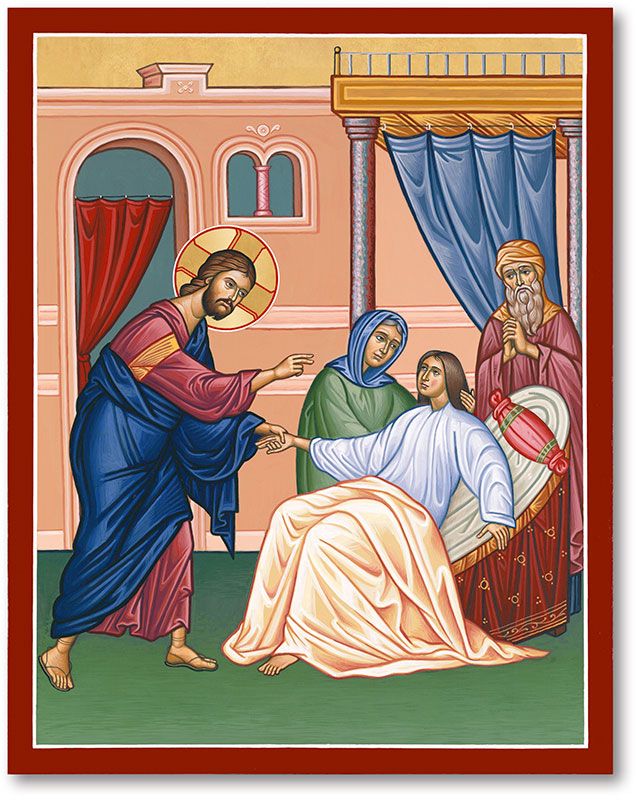
Jairos dotter får liv igen

Här är predikan jag höll i Ulricehamns kyrka och i Brunnsnäskyrkan i söndags på 16e söndagen efter trefaldighet under rubriken ”döden och livet” med evangelietexten om hur Jesus gör en död flicka levande. Hoppas detta är till glädje för dig!

En häftig upptäckt

En gång gjorde jag en upptäckt (som säkert många upptäckt före mig i historien). Jag läser lite för sällan i apostlagärningarna men där finns en berättelse som är parallell till evangelietexten idag om hur Jesus uppväcker den döda flickan.

Det förekommer vid ett fåtal tillfällen i nya testamentet och i apostlagärningarna står det om Petrus att han möter sörjande kvinnor, den goda och fromma kvinnan Dorkas har dött och de visar honom de kläder Dorkas i sin godhet har försett dem med. Det var ganska praktisk omsorg att sy kläder till fattiga!

I förbifarten får vi höra att hon kallades både Dorkas och Tabita. Petrus blir förd till hennes döda kropp och så säger han ”Tabita, stig upp”! Och Tabita/Dorkas blir levande igen!

Varför håller apostlagärningarnas författare på och kommer dragande med olika namn på henne?

Ett namn som låter likt

Det var vanligt att ha olika namn på olika språk och nu på grekiska hade det väl varit rimligt att kalla henne Dorkas då. Men Petrus säger hennes arameiska namn. Och vi tror vi vet varför va?

För som det blir nu säger han nästan exakt samma sak som Jesus sa till Jairos dotter. Talita, lilla flicka, och Tabita låter nästan likadant.

Jag tänker mig att när Petrus stod där vid en död kropp igen mindes han hur han långt tidigare sett sin mästare i en liknande situation och så faller orden sig så. Och det finns massor av paralleller mellan hur de båda berättelserna berättas.

Ett evangelium baserat på ögonvittnen

Ni kanske hört att det finns gammal kristen tradition om att Markus (som vi läser från idag) ska ha följt Petrus och tecknat ner evangeliet efter vad han berättat.

Det har ifrågasatts förstås men jag har lärt mig via den store bibelvetaren Richard Baukham att det finns goda skäl att tänka sig ett ögonvittne bakom det som berättas i Markusevangeliet.

Ofta går meningar hos Markus i stil med ”De kom till Genesaret, där gjorde Jesus såhär…”.

Detta med att lite onödigt nämna en grupp först (och dessutom lite oklart vilka ”de” är, det framgår ganska sällan!) för att sedan berätta vad Jesus gör (en ”plural to singular narrative device”, det ni) vore naturligt som följt om Markus hört en lärjunge. Och bland lärjungarna passar Petrus bäst in eftersom han är med i så många av händelserna. Det passar bra ihop med helheten i evangeliet.

Det vore mycket mindre konstigt att Markus skriver som han skriver om vi antar att han hört någon berätta så. Säga ”vi kom till Genesaret, där gjorde Jesus såhär”. Och att Markus sedan tagit bort viformen. I Matteus och Lukasevangeliet som tros vara baserade på Markus har det här städats upp så att det ofta bara står vad han/Jesus gjorde.

Bibeln som trovärdig källa

Det där kan ni fundera på men jag tycker att tillsammans med berättelsen om Tabita så har vi här ett litet fönster mot hur ett ögonvittne en gång berättat om det hela.

Allt det där var egentligen en utvikning men det är ju bra både att fundera på bibelns grund i apostlarnas ord.

Jag är övertygad om att det spelar rätt stor roll att vi inte behöver tro blint på bibeln bara för att någon präst har sagt det utan får hitta skäl som är giltiga för alla om bibelns trovärdighet och annat.

Och att hitta spår av ögonvittnen är absolut en sådan sak som ökar trovärdigheten, eller hur?

Det andra vi kanske märkte i berättelsen om Petrus och Tabita var något av hur den tidiga kyrkan såg på sin verksamhet. Man upplevde att man verkade i samma anda/ande som Jesus. Det som han gjort, det ville de också göra. På alla plan.

Men nu då till Jesus verksamhet.

En del av en macka

Vi befinner oss i slutet på en ”macka”.

Först har Jairos, väldigt ödmjukt bett Jesus komma hem till honom, på vägen stöter Jesus på en kvinna som haft blödningar i 12 år och rör vid hans kläder för att så finna sig botad (tyvärr får vi prata om henne en annan gång). Och sedan fortsätter Jesus hem till flickan.

På vägen får han veta att det är lönlöst för hon är död. Men han fortsätter ändå! Det här är mer än Jairos hade vågat tro eller be om. Det blir lite som en dubbelmacka med två bröd och något annat emellan.

En otrolig händelse med otrolig innebörd

Vi måste väl säga att det är ett av Jesus största underverk, att göra en död levande igen?

Det är så att jag hört den här berättelsen sedan jag var liten och vet hur det går och kanske just därför fattar jag inte riktigt. Det här är ju sådant som brukar hända i bibeln?

Men anspråket är egentligen oerhört! Att det här var något som faktiskt hände på riktigt. Petrus berättar om det och det har påverkat honom på djupet att vara med om det.

Det är väldiga anspråk, kanske också skrämmande och stötande för en modern människa.

Som det ofta är med Jesus mäktiga gärningar så finns det samtidigt en otrolig historisk händelse, och en teologisk innebörd. Det Jesus gör visar också på vem han är och vad han kommit för att göra. Det Jesus gör här för oss till kärnan av evangeliet.

Inbrott i Guds goda värld

För bibelns författare, som för Job som vi hörde om innan, tänker man sig världen både som Guds goda skapelse och som en plats där döden brutit sig in.

Lyssna nu nya konfirmander för det här är lite grundläggande. Gud har skapat världen god, gett oss livet, upprätthåller allt det goda.

Guds vilja är att det goda ska ske och människan och naturen leva i fred. Men så kan man säga att det onda gjort inbrott, destruktiva krafter förstör, människan lockas att vara del i det onda.

Döden beskrivs i bibeln som en fiende. Så känns det ju också ofta tycker jag.

Och den som skreb Job menade också att döden även kommer i småportioner. Ensamhet, sjukdom, orättvisa och sådant är små doser av död mitt i livet.

Det finns någon slags koppling mellan kvinnan med blödningarna och den döende flickan. Den ena har varit sjuk i 12 år, den andra har dött 12 år gammal.

Det är olika lägen de befinner sig i men ser man det som jag sa nyss att Job tänkte sig dödens välde blir båda två exempel på samma sak. Att ondska och död härjar i världen.

Jesus stoppar det onda

Det Jesus stora uppdrag består i är att stoppa det onda. Och man märker att han håller på med det genom att bota sjuka, föra utsatta in i gemenskap, tillrättavisa de som medverkar till förtryck. Och till och med göra döda levande.

Det är tidiga tecken på det han ska åstadkomma i sin död och uppståndelse. Allt kommer mynna ut i att Gud är överman över ondska och död. Vi kan vänta på den dag då Guds goda vilja ska ske överallt.

12 är också siffran vi omedelbart kan associera till Israels folk de 12 stammarna. Jesus uppdrag handlar om att rädda sitt folk men inte bara det. I bibeln är det hela skapelsens räddning som är perspektivet.

”Old news” för oss alla hoppas jag men alltid värt att påminna om. Guds omsorg gäller hela vår värld med allt sitt myllrande liv.

Och som jag sa så har kyrkan som uppdrag att fortsätta på Jesus verksamhet. Så även vi ska medverka till att upprätta både människor och vår värld i väntan på Herrens dag.

Paulus är inte rädd för döden

Paulus skriver till de kristna i Filippi om döden. Även där har jag som yngre tagit till mig orden ganska lättvindigt, klart att han skriver så, det här är ju bibeln!

Men även Paulus var en riktig person som du och jag. Och han verkar mena det han säger! Han är orädd inför döden.

Nu har väl i och för sig Paulus varit nära döden många gånger då han retat upp folk med sitt predikande så han är väl lite mer van. Men ändå.

Paulus lever även han utifrån evangeliet om att Jesus segrat över döden. Och att vi, vare sig vi lever eller dör, rör oss mot hans stora uppståndelses dag. Han räknar med att allt det han upplevt hittills av livet tillsammans med den heliga Anden eller i kyrkans gemenskap är en försmak av Guds rike här och nu.

Håll fast vid honom

”Det finns en frälsare och det är inte du”.

Så sammanfattade någon evangeliet. Vi är ofta maktlösa inför livet. Ibland är vi nere på Jobs nivå så att vi knappt längre orkar mer.

Paulus skulle sagt att när jag är svag, då är jag stark, för då söker jag fäste i den som är större än jag själv.

Evangeliet har nått oss, om Jesus förmåga att rädda ur dödens grepp. Må vi aldrig stå utan hopp utan hålla fast vid honom.

Kommentarer

Ett svar till ”Bibelns riktiga ögonvittnen talar”

  1. Profilbild för anna gitarra
    anna gitarra

    From Mary we learn to surrender to God’s will in all things. From Mary, we learn to trust even when all hope seems gone. From Mary, we learn to love Christ, her Son and the Son of God.

    St. Pope John Paul II
    The 7 Sorrows Rosary of Mary leads us through the sorrows of Christ’s life. “Pray for us, O Virgin most sorrowful, that we may be made worthy of the promises of Christ.”

    Table of Contents

    What is the 7 Sorrows Rosary?
    Middle Ages origin
    Modern popularity
    Why do we pray the 7 Sorrows Rosary?
    When do we pray the 7 Sorrows Rosary?
    How to Pray: 7 Sorrows Rosary {Full Version}
    How to Pray: 7 Sorrows Rosary {Shortened Version}
    Related Prayers
    Prayer Card
    What is the 7 Sorrows Rosary?
    Middle Ages origin
    The Rosary of the Seven Sorrows dates back to the fourteenth century. Mary, Our Lady of Sorrows, appeared to St. Bridget of Sweden and revealed this Rosary devotion to her. St. Bridget devoted her life to following in the footsteps of Christ — truly caring for people in need.

    Facebook
    Twitter
    Pinterest
    reddit
    Nuestra Señora de las Angustias (Colección Cisneros) – Our Lady of Sorrows
    Modern popularity
    The Rosary became popular again following the Marian apparitions in Kibeho, Rwanda, in the 1980s. During Mary’s apparitions to Marie-Claire Mukangango, she assigned the young woman a mission to reintroduce this special Rosary to the world. Marie-Claire was killed in the genocide of over a million people in Rwanda.

    Why do we pray the 7 Sorrows Rosary?
    We pray this Rosary to learn to suffer with love, as Mary, the Mother of Jesus, did. The 7 Sorrows Rosary leads us to understand our suffering, sins, and sorrows. Doing so helps us better live a life of joy in the Lord so that we can serve others like St. Bridget and Marie-Claire did.

    As we pray with Mary through her seven sorrows, we begin to feel empathy for her suffering, the suffering of her Son, our Savior, our neighbors, and our own.

    When do we pray the 7 Sorrows Rosary?
    This Rosary can be prayed at any time, anywhere, in any season of life. We can even dedicate our prayer to the suffering of a friend, family member, ourselves, or the world. We pray this devotion when we need the guidance of the Blessed Virgin and when we need to remind ourselves of the joy that comes out of suffering in this life.

    It is also common to pray this Rosary on September 15th, the Feast Day of Our Lady of Sorrows.

    See below for how to pray both the full version and a shortened version.

    How to Pray the Seven Sorrows Rosary {Full Version}
    How to pray 7 Sorrows Rosary – 7 Swords – Hallow App
    Facebook
    Twitter
    Pinterest
    reddit
    How to Pray: 7 Sorrows Rosary
    Time needed: 34 minutes

    How to Pray the Seven Sorrows Rosary {Long Version}

    Begin
    In the name of The Father, and The Son, and The Holy Spirit. Amen.

    Pray
    My God, I offer You this Rosary for Your glory, so I can honor your Holy Mother, the Blessed Virgin, so I can share and meditate upon her suffering. I humbly beg you to give me true repentance for all my sins. Give me wisdom and humility, so that I may receive all the indulgences contained in this prayer.
    O my God, I am heartily sorry for having offended You, and I detest all my sins because I dread the loss of Heaven and the pains of hell; but most of all because they offend You, my God, You Who are all good and deserving of all my love. I firmly resolve, with the help of Your grace, to confess my sins, to do penance, and to amend my life. Amen.

    Say 3 Hail Mary’s.

    Hail, Mary, full of grace, the Lord is with thee. Blessed art thou amongst women and blessed is the fruit of thy womb, Jesus. Holy Mary, Mother of God, pray for us sinners, now and at the hour of our death. Amen.

    Pray
    Most Merciful Mother, remind us always about the Sorrows of your Son, Jesus.

    The First Sword of Sorrow: The Prophecy of Simeon
    Luke 2:34-35
    And Simeon blessed them and said to Mary his mother, “Behold, this child is destined for the fall and rise of many in Israel, and to be a sign that will be contradicted (and you yourself a sword will pierce) so that the thoughts of many hearts may be revealed”.

    Pray
    Beloved Mother Mary, whose Heart suffered beyond bearing because of us, teach us to suffer with you and with love, and to accept all the suffering God deems it necessary to send our way. Let us suffer, and may our suffering be known to God only, like yours and that of Jesus. Do not let us show our suffering to the world, so it will matter more and be used to atone for the sins of the world. You, Mother, who suffered with the Savior of the world, we offer you our suffering, and the suffering of the world, because we are your children. Join those sorrows to your own and to those of the Lord Jesus Christ, then offer them to God the Father. You are a Mother greater than all.

    Now, pray 1 Our Father and 7 Hail Marys.

    Most Merciful Mother, remind us always about the Sorrows of your Son, Jesus.

    The Second Sword of Sorrow: The Flight Into Egypt
    Matthew 2:13-14
    When they had departed, behold, the angel of the Lord appeared to Joseph in a dream and said, “Rise, take the child and his mother, flee to Egypt, and stay there until I tell you. Herod is going to search for the child to destroy him.” Joseph rose and took the child and his mother by night and departed for Egypt.

    Pray
    Beloved Mother, who has suffered so much, give to us your courageous heart. Please pray for us to have strength so that we can be brave like you and accept with love the suffering God sends our way. Help us to also accept all the suffering we inflict upon ourselves and the suffering inflicted upon us by others. Heavenly Mother, you, in union with Jesus, purify our suffering so that we may give glory to God and save our souls.

    Now, pray 1 Our Father and 7 Hail Marys.

    Most Merciful Mother, remind us always about the Sorrows of your Son, Jesus.

    The Third Sword of Sorrow: The Loss of Jesus in the Temple
    Luke 2:43-45
    After they had completed its days, as they were returning, the boy Jesus remained behind in Jerusalem, but his parents did not know it. Thinking that he was in the caravan, they journeyed for a day and looked for him among their relatives and acquaintances, but not finding him, they returned to Jerusalem to look for him.

    Pray
    Beloved Mother, teach us to accept all our sufferings because of our sins and to atone for the sins of the whole world.

    Now, pray 1 Our Father and 7 Hail Marys.

    Most Merciful Mother, remind us always about the Sorrows of your Son, Jesus.

    The Fourth Sword of Sorrow: Mary Meets Jesus on His Way to Calvary
    Luke 23:27-29
    A large crowd of people followed Jesus, including many women who mourned and lamented him. Jesus turned to them and said, “Daughters of Jerusalem, do not weep for me; weep instead for yourselves and for your children, for indeed, the days are coming when people will say, ‘Blessed are the barren, the wombs that never bore and the breasts that never nursed’.

    Pray
    Beloved Mother, so stricken with grief, help us to bear our own suffering with courage and love so that we may relieve your Sorrowful Heart and that of Jesus. In doing so, may we give glory to God Who gave you and Jesus to humanity. As you suffered, teach us to suffer silently and patiently. Grant unto us the grace of loving God in everything. O Mother of Sorrows, most afflicted of all mothers, have mercy on the sinners of the whole world.

    Now, pray 1 Our Father and 7 Hail Marys.

    Most Merciful Mother, remind us always about the Sorrows of your Son, Jesus.

    The Fifth Sword of Sorrow: Mary Stands at the Foot of the Cross
    John 19:25-27
    Standing by the cross of Jesus were his mother and his mother’s sister, Mary the wife of Clopas, and Mary of Magdala. When Jesus saw his mother and the disciple there whom he loved, he said to his mother, “Woman, behold, your son.” Then he said to the disciple, “Behold, your mother.” And from that hour the disciple took her into his home.

    Pray
    Beloved Mother, Queen of the Martyrs, give us the courage you had in all your sufferings so that we may unite our sufferings with yours and give glory to God. Help us follow all His commandments and those of the Church so that Our Lord’s sacrifice will not be in vain, and all sinners in the world will be saved.

    Now, pray 1 Our Father and 7 Hail Marys.

    Most Merciful Mother, remind us always about the Sorrows of your Son, Jesus.

    The Sixth Sword of Sorrow: Jesus is Taken Down From the Cross
    John 19:32-34
    So the soldiers came and broke the legs of the first and then of the other one who was crucified with Jesus. But when they came to Jesus and saw that he was already dead, they did not break his legs, but one soldier thrust his lance into his side, and immediately blood and water flowed out.

    Pray
    We thank you, Beloved Mother, for your courage as you stood beneath your dying Child to comfort Him on the Cross. As our Savior drew His last breath, you became a wonderful Mother to all of us; you became the Blessed Mother of the world. We know that you love us more than our own earthly parents do. We implore you to be our advocate before the Throne of Mercy and Grace so that we can truly become your children. We thank you for Jesus, our Savior and Redeemer, and we thank Jesus for giving you to us. Please pray for us, Mother.

    Now, pray 1 Our Father and 7 Hail Marys.

    Most Merciful Mother, remind us always about the Sorrows of your Son, Jesus.

    The Seventh Sword of Sorrow: The Burial of Jesus
    John 19:41-42
    Now in the place where he had been crucified there was a garden, and in the garden a new tomb, in which no one had yet been buried. So they laid Jesus there because of the Jewish preparation day; for the tomb was close by.

    Pray
    Most Beloved Mother, whose beauty surpasses that of all mothers, Mother of Mercy, Mother of Jesus, and Mother to us all, we are your children and we place all our trust in you. Teach us to see God in all things and all situations, even our sufferings. Help us to understand the importance of suffering, and also to know the purpose of our suffering as God had intended it.
    You yourself were conceived and born without sin, were preserved from sin, yet you suffered more than anybody else. You accepted suffering and pain with love and with unsurpassed courage. You stood by your Son from the time He was arrested until He died. You suffered along with Him, felt His every pain and torment. You accomplished the Will of God the Father; and according to His will, you have become our Mother.

    We beg you, dear Mother, to teach us to do as Jesus did. Teach us to accept our cross courageously. We trust you, most Merciful Mother, so teach us to sacrifice for all the sinners in the world. Help us to follow in your Son’s footsteps, and even to be willing to lay down our lives for others.

    Now, pray 1 Our Father and 7 Hail Marys.

    Most Merciful Mother, remind us always about the Sorrows of your Son, Jesus.

    Closing Prayer
    Queen of Martyrs, your heart suffered so much. I beg you, by the merits of the tears you shed in these terrible and sorrowful times, to obtain for me and all the sinners of the world the grace of complete sincerity and repentance. Amen.

    Mary, who was conceived without sin and who suffered for us, pray for us. (Pray 3x)

    In the name of The Father, and The Son, and The Holy Spirit. Amen.

    Pray the Full Version on Hallow
    How to Pray: 7 Sorrows Rosary {Shortened Version}
    Begin
    In the name of The Father, and The Son, and The Holy Spirit. Amen.

    O God, come to my assistance.

    O Lord, make haste to help me.

    Glory be to the Father, and to the Son, and to the Holy Spirit.

    As it was in the beginning, is now, and ever shall be, world without end. Amen.

    Now, pray 1 Hail Mary.

    The First Sword of Sorrow: The Prophecy of Simeon
    I grieve for thee, O Mary most sorrowful, in the affliction of thy tender heart at the prophecy of the holy and aged Simeon. Dear Mother, by thy heart so afflicted, obtain for me the virtue of humility and the gift of the holy fear of God.

    Now, pray 1 Hail Mary.

    The Second Sword of Sorrow: The Flight Into Egypt
    I grieve for thee, O Mary most sorrowful, in the anguish of thy most affectionate heart during the flight into Egypt and thy sojourn there. Dear Mother, by thy heart so troubled, obtain for me the virtue of generosity, especially toward the poor, and the gift of piety.

    Now, pray 1 Hail Mary.

    The Third Sword of Sorrow: The Loss of Jesus in the Temple
    I grieve for thee, O Mary most sorrowful, in those anxieties which tried thy troubled heart at the loss of thy dear Jesus. Dear Mother, by thy heart so full of anguish, obtain for me the virtue of chastity and the gift of knowledge.

    Now, pray 1 Hail Mary.

    The Fourth Sword of Sorrow: Mary Meets Jesus on His Way to Calvary
    I grieve for thee, O Mary most sorrowful in the consternation of thy heart at meeting Jesus as he carried His Cross. Dear Mother, by thy heart so troubled, obtain for me the virtue of patience and the gift of fortitude.

    Now, pray 1 Hail Mary.

    The Fifth Sword of Sorrow: Mary Stands at the Foot of the Cross
    I grieve for thee O Mary, most sorrowful, in the martyrdom which thy generous heart endured in standing near Jesus in His agony. Dear Mother, by thy afflicted heart, obtain for me the virtue of temperance and the gift of counsel.

    Now, pray 1 Hail Mary.

    The Sixth Sword of Sorrow: Jesus is Taken Down From the Cross
    I grieve for thee, O Mary most sorrowful, in the wounding of thy compassionate heart, when the side of Jesus was struck by the lance and His Heart was pierced before His body was removed from the Cross. Dear Mother, by thy heart thus transfixed, obtain for me the virtue of fraternal charity and the gift of understanding.

    Now, pray 1 Hail Mary.

    The Seventh Sword of Sorrow: The Burial of Jesus
    I grieve for thee, O Mary most sorrowful, for the pangs that wrenched thy most loving heart at the burial of Jesus. Dear Mother, by thy heart sunk in the bitterness of desolation, obtain for me the virtue of diligence and the gift of wisdom.

    Now, pray 1 Hail Mary.

    Pray for us, O Virgin most sorrowful, that we may be made worthy of the promises of Christ.

    Let us pray: Let intercession be made for us, we beseech Thee, O Lord Jesus Christ, now and at the hour of our death, before the throne of Thy mercy, by the Blessed Virgin Mary, Thy Mother, whose most holy soul was pierced by a sword of sorrow in the hour of Thy bitter Passion. Through Thee, Jesus Christ, Savior of the world, Who with the Father and the Holy Spirit lives and reigns, world without end. In the name of the Father, and of the Son, and of the Holy Spirit. Amen.

    You can find the Seven Sorrows Rosary on the Hallow App in the Dailies section. We look forward to praying this beautiful devotion with you soon!

    Pray the 7 Sorrows Rosary on Hallow
    Related Prayers
    How to Pray the Divine Mercy Chaplet
    How to Pray the 54-Day Novena
    How to Pray the Latin Rosary
    How to Pray the Surrender Novena
    Prayers for Anxiety and Fear
    Feast of Our Lady of Guadalupe
    Download, Print, or Share “How to Pray: 7 Sorrows Rosary” with Friends and Family
    How to Pray – 7 Sorrows Rosary – Hallow App
    Facebook
    Twitter
    Pinterest
    reddit
    How to Pray: 7 Sorrows Rosary

Kommentera det här inlägget

Din kommentar, ditt namn och din eventuella webbplats publiceras under det här inlägget och kan läsas av alla besökare. Din e-postadress publiceras inte. Fält som är markerade med * måste vara ifyllda för att du ska kunna kommentera.

Denna webbplats använder Akismet för att minska skräppost. Lär dig om hur din kommentarsdata bearbetas.